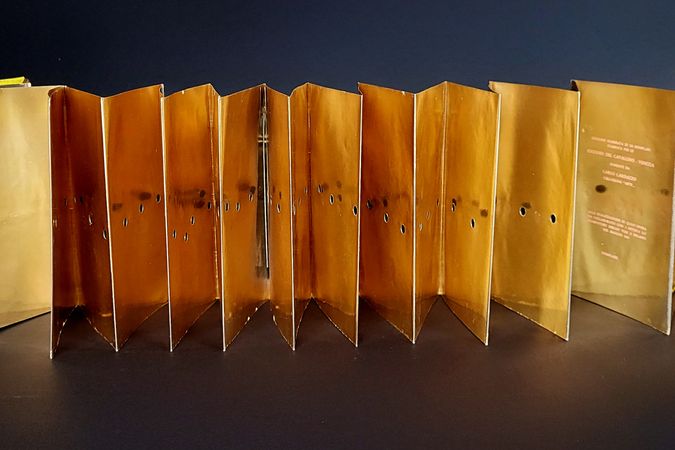
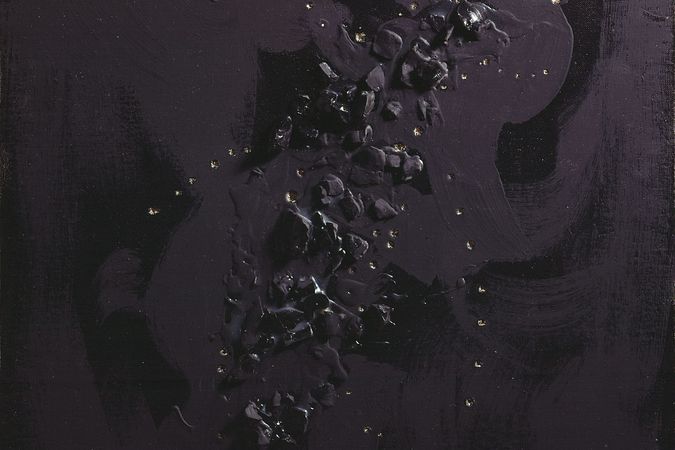
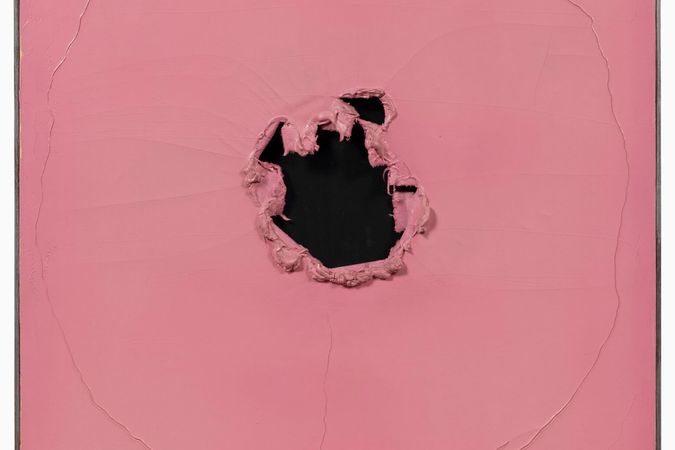
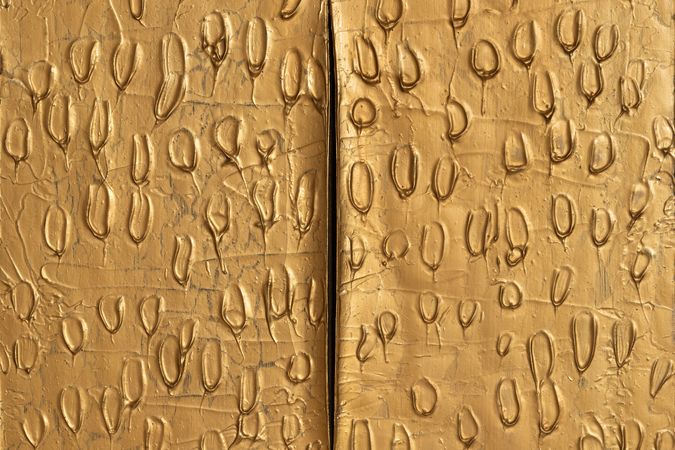
From 1958 to 1968, Fontana created the cycles of cuts, Concepts of Space and Waiting, in which, as in the work in the collection, the single or repeated tearing of the canvas determines the timelessness of the sign and the contamination between the space of the work and the of the environment that surrounds it. This new measure of the space of the work, which no longer coincides with the traditional idea of separating the canvas from reality, is further investigated in the Fine di Dio series (1963-1964), in which oval canvases, where sequins are sometimes affixed , are punctuated by holes and lacerations, in the Teatrini (1964-1966), in which figurative elements also appear, and in the Ellissi (1967), elliptical tables in which the holes are made by machine. In 1966 the artist won the prize at the Venice Biennale with a personal room, where he created, in collaboration with Carlo Scarpa, a labyrinthine oval environment illuminated by white light and punctuated by white canvases crossed by a cut. An extensive documentation of proposals and projects attest to the relationship between Fontana and the gallery owner Lucio Amelio, in view of the organization of an exhibition that was never realized due to the artist's death, who had exhibited for the first time in Naples with a solo show at the gallery. The Center in 1963.


The work "Spatial Concept, Waits" by Lucio Fontana is kept at Madre Museum, in Naples.
"Spatial Concept, Waits" is a work by Lucio Fontana from 1959.
You can admire the work in the collection of Madre Museum. Artsupp Card holders get reductions and dedicated benefits.