About
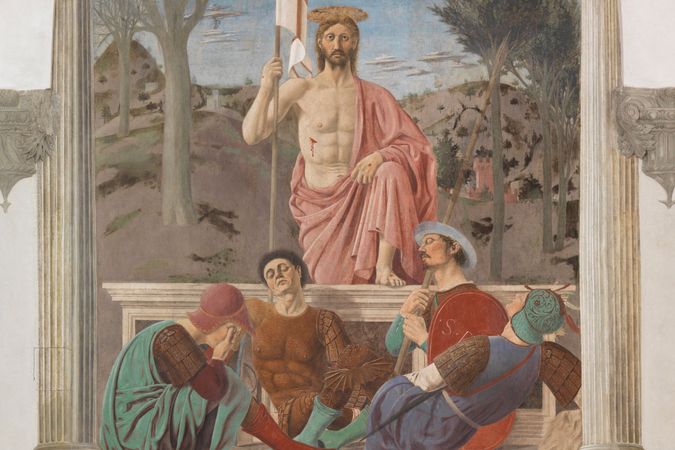
The Museum was initially established as a Picture Gallery in the 1920s, but in reality, the formation of the rich art collection, which can also be reconstructed from a documentary point of view, began many centuries earlier. In fact, the city government was always involved in enriching the art collections, commissioning works from prestigious artists as early as the 16th century to adorn and enhance the importance of the Town Hall. The starting point was obviously offered by the Resurrection by Piero della Francesca, emblem and symbol of the city, frescoed around 1460 in the Conservators' Hall of the Residence Palace, a work defined by the English writer Aldous Huxley as "the most beautiful painting in the world." Thanks to this illustrious precedent, the government apparatus triggered a first and innovative phenomenon of collecting open to the public. Already in the second half of the 16th century, in order to make the representative character of the Palace more explanatory, the Municipality called on the Bassano family, famous and very active Venetian painters in Sansepolcro, to decorate the Residence Chapel, and acquired works by Raffaellino del Colle and Leonardo Cungi.
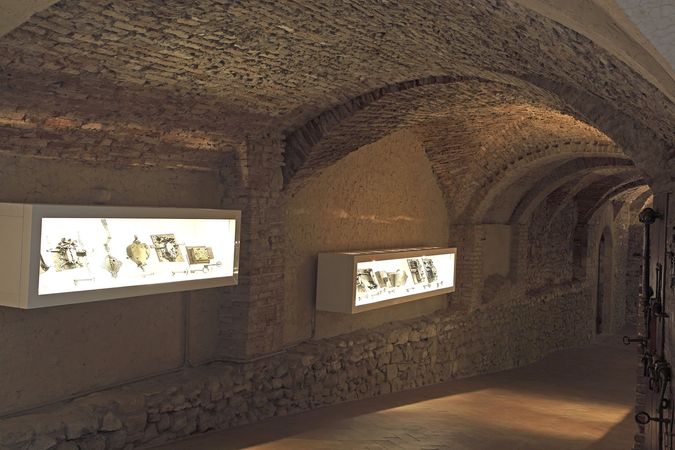
During the 17th century, on the occasion of a visit by Leopoldo II, the original collection was expanded thanks to the transfer, from the nearby Pretorio Palace, of the famous engravings by Cherubino Alberti. Given these illustrious precedents, it was then natural to include in these rooms, in 1846, the San Ludovico, detached from the walls of the Pretorio Palace. Following the Leopoldine and Napoleonic suppressions of the religious orders, between the late 1700s and the first decade of the 1800s, the Museum's collection began to take shape as an experimental and approximate gallery of works of art. The growing desire to preserve and protect the city's artistic heritage supported the transfer to the rooms of the Residence Palace of works that were "at risk of deterioration"; this referred in particular to the paintings kept in the churches of Santa Chiara, Sant'Agostino, and to the polyptych of the Madonna della Misericordia, which became part of the Civic Picture Gallery in 1901. In the new century, a true culture of conservation spread in Sansepolcro, to the point that the organization of the Picture Gallery now also involved experts who, in parallel with Piero's literary fortune (Roberto Longhi, Mario Salmi, Kenneth Clark, and Rudolf Wittkower), showed a growing interest in the Valtiberina. Over the years, the general enthusiasm was supported by the discovery, and subsequent transfer to the Museum's rooms, of the San Giuliano. Subsequently, the collaboration between the Municipality of Sansepolcro, the Superintendence of Arezzo, and the Tuscany Region allowed the inauguration, in 1975, of the new Museum, which was expanded in its exhibition spaces thanks to the recovery of rooms on the top floor and the underground floor.
Artists on show

Programme and activities
Guided tours, exhibitions and events at Civic Museum of Sansepolcro will appear here. Follow the museum to get updates.
What to see
See all (6)