About
The construction date of Palazzo Pigorini is documented by the Sardi Atlas around 1767, but the architectural layout, which differs little from that, suggests that the building has much older origins.
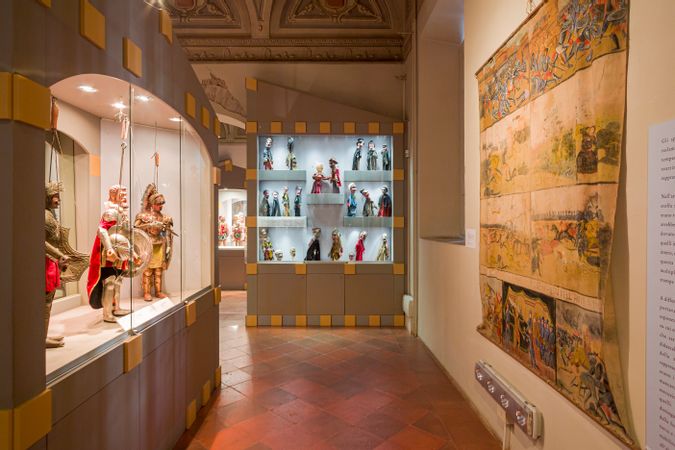
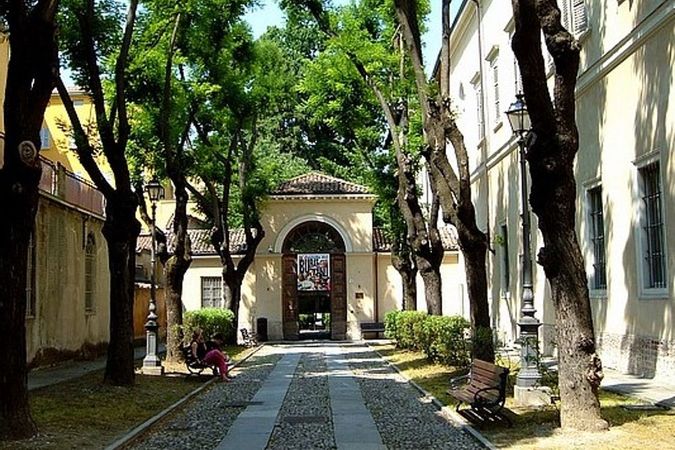
The Palace has the characteristics of a courtyard house, with an internal courtyard which has a portico on the side. What makes the building famous is the fact that it was the residence, as attested by two plaques on the facade, of two famous personalities: the poet Angelo Mazza and the explorer Vittorio Bottego. The main floor was frescoed by Francesco Scaramuzza in the mid-nineteenth century, with scenes such as The Night and the Apotheosis of the poet. At the beginning of the twentieth century the Palace was purchased by Adriana Pigorini Lusignani who subsequently bequeathed it to the Municipality of Parma to use it as a museum, naming it Pigorini. To adapt the building to the new museum functions, the Municipality carried out a careful recovery and restoration project directed by the architect Maurizio Bocchi. Security systems, the installation of a lift and partial changes to the floor levels with slides have been created which make the Palace accessible to all. The building was reopened to the public as an exhibition venue in 1996.
Programme and activities
See allGuided tours, exhibitions and events at Pigorini Palace will appear here. Follow the museum to get updates.