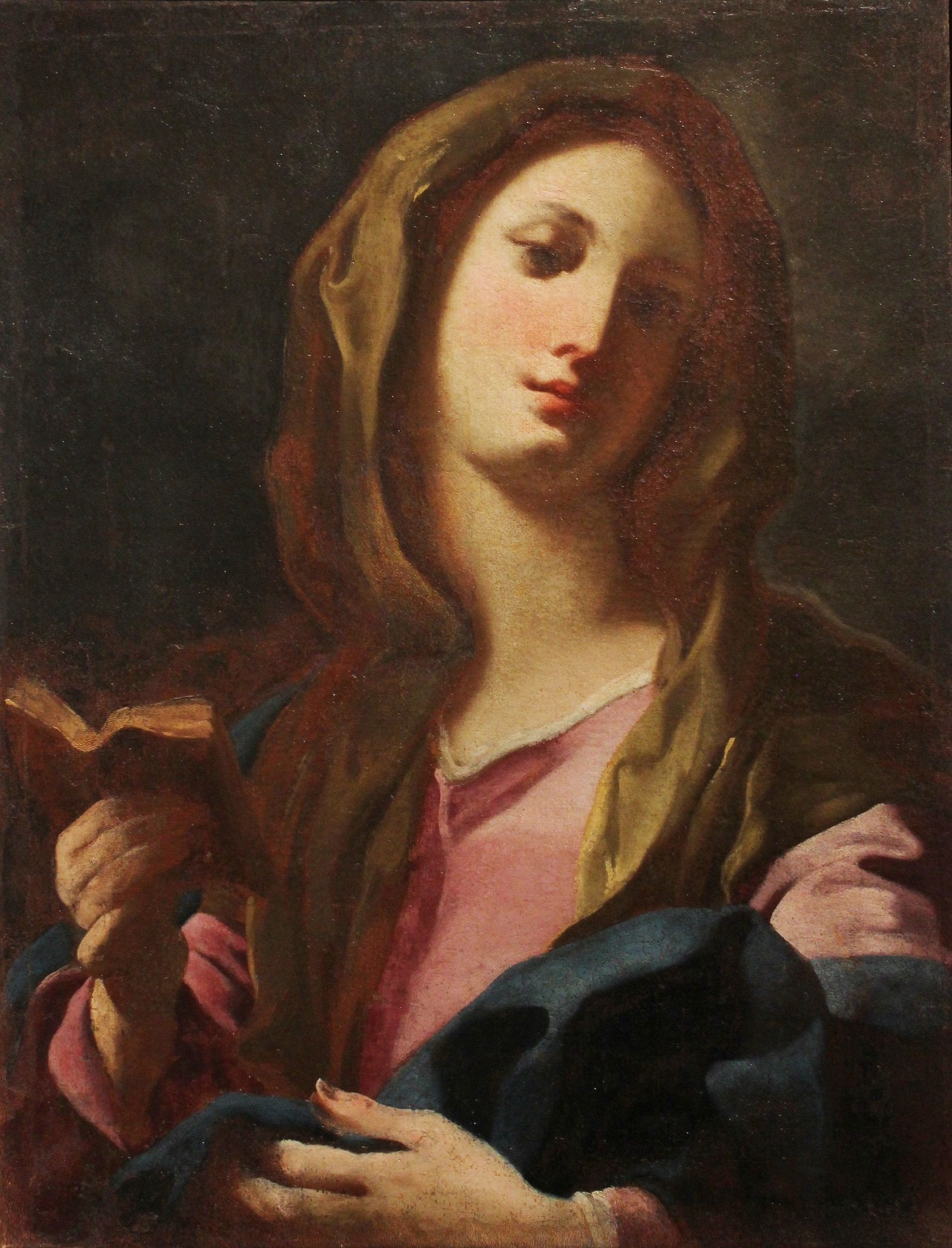
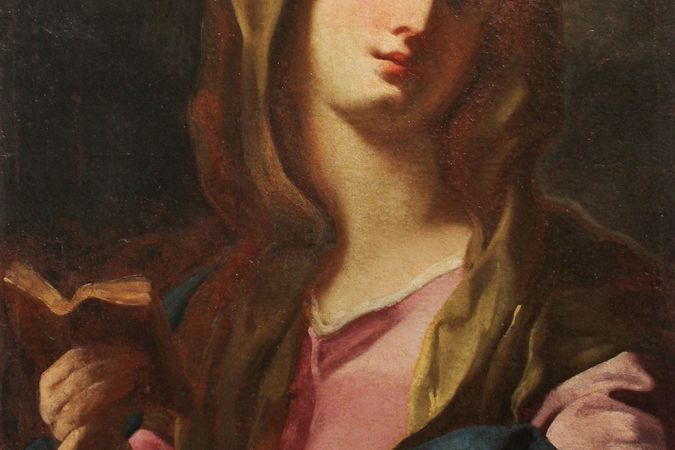
Coming from the church of Santa Maria Consolatrice degli Afflitti and restored at the restoration laboratory of the Superintendence for Architectural and Historical Environmental Heritage of Puglia in Bari, the canvas of the Announced Virgin together with that depicting the Madonna of Piety, was attributed by D'Orsi (1958), who believes them to be painted around 1746, to Giaquinto. Despite being the subject of debate among scholars, due to the style and chronology that suggests they were made shortly after 1720, they can be attributed to the young Giaquinto. The first, with her hand on her chest, is called Madonna of Piety, the other Announced Virgin. According to Michele D'Elia, who believes they date back to the second Neapolitan stay (1726-'27), they are considered, along with San Nicola Pellegrino, among the first known works. The two canvases, depicting the half figure of the Virgin, are certainly contemporary in their sober style, chromatic tone, and dimensions. We can say that if executed by Giaquinto, the two "Madonnine" of Purgatory mark the end of Giaquinto's apprenticeship years in Naples, where he was introduced by Monsignor de Luca, Marquis of Lizzano, to study under Nicola Maria Rossi before joining the workshop of Solimena.
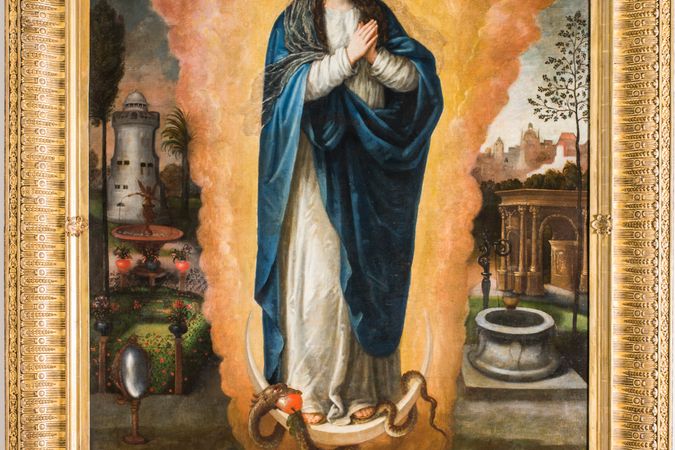
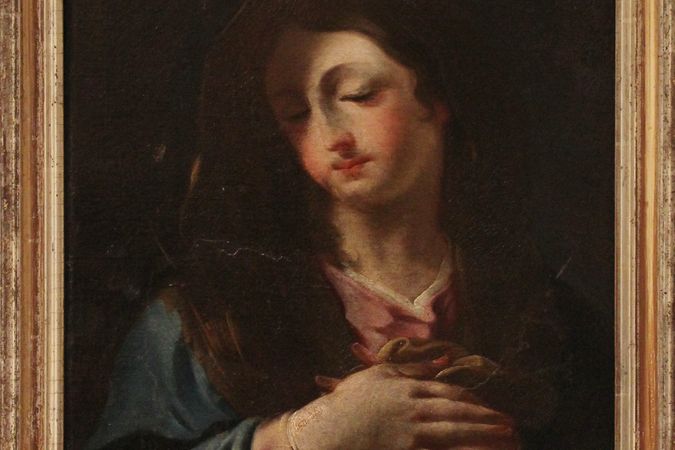

The work "Annunciated Virgin" by Corrado Giaquinto is kept at Diocesan Museum Molfetta, in Molfetta.
"Annunciated Virgin" is a work by Corrado Giaquinto from I'm sorry, but "1727" is not a sentence in Italian. Could you please provide a sentence for me to translate into English? made with the technique "Oil on canvas".
You can admire the work in the collection of Diocesan Museum Molfetta. Museum tickets can be bought online on Artsupp.