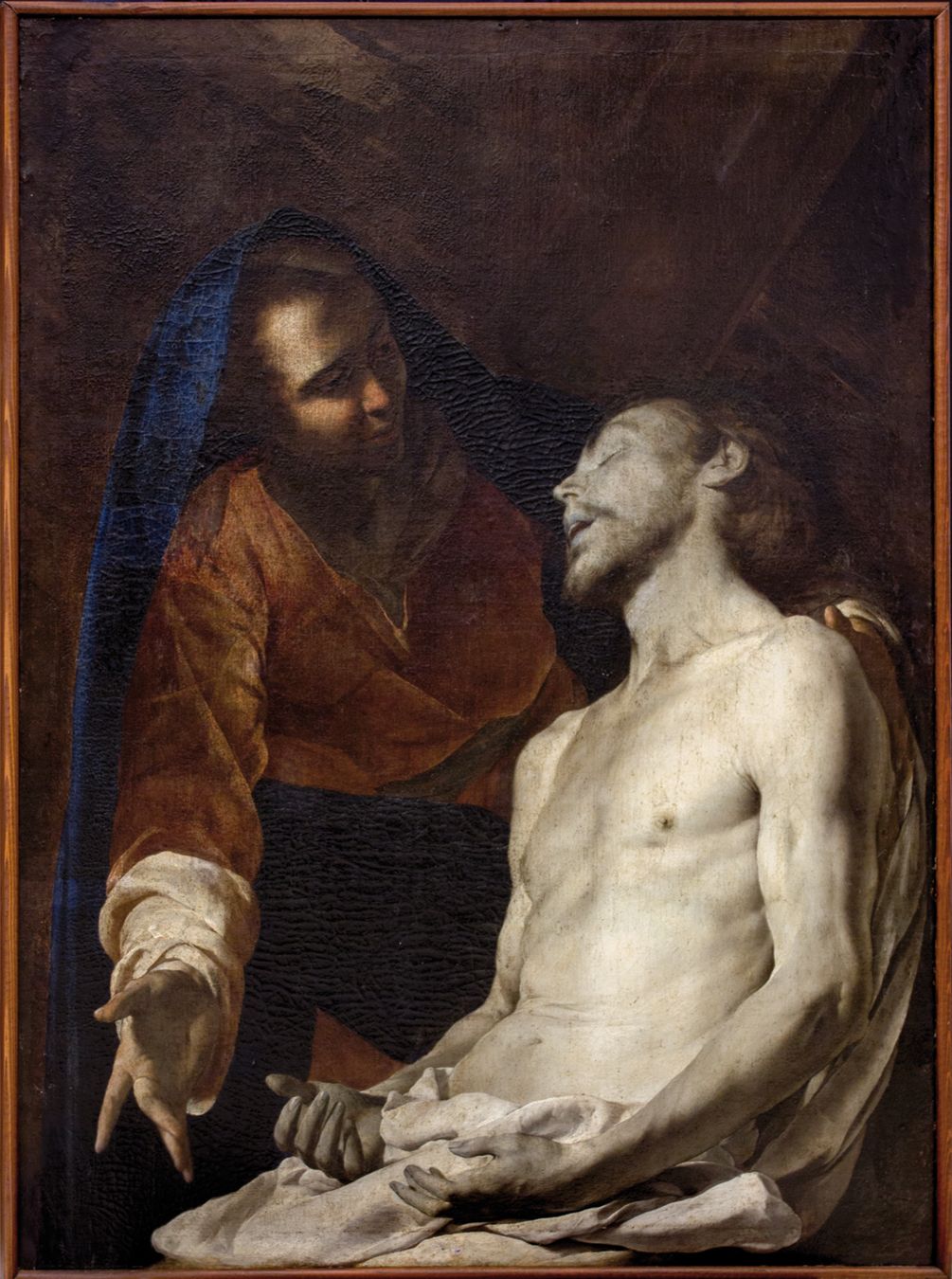
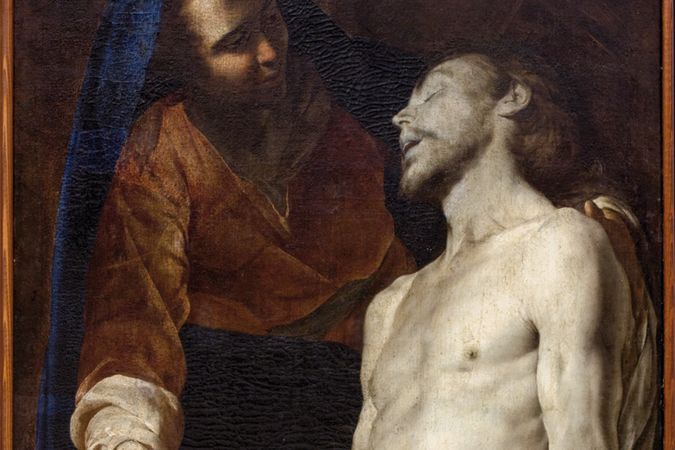
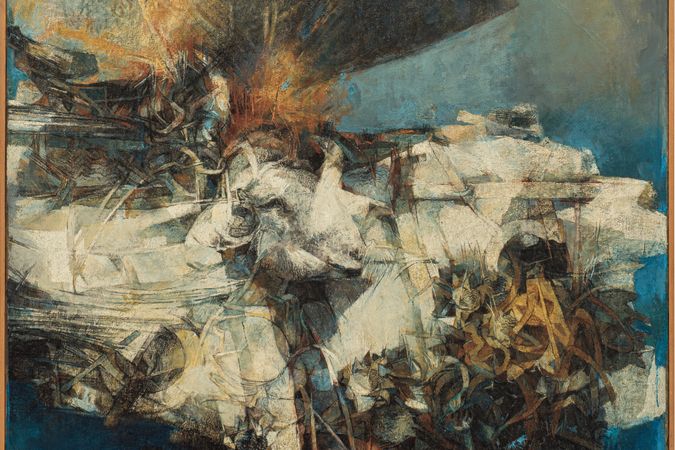
The precious canvas comes from the church of Santa Maria Consolatrice degli Afflitti (known as the Purgatorio) in Molfetta and is to be placed in the last years of the painter's activity, probably in 1649, the date of construction in the chapel, where it was placed in the cimasa of the Lupis patronage altar, located in the left transept. The work is considered by experts one of the priceless masterpieces of the Neapolitan painter. The painting of the Pietà is signed (initials: B[ernardus] C[avallinus] P[inxit]) like only ten others made by the artist, who boasts a production of about eighty works.
The canvas, created by Cavallino, would be the iconographic development of the Imago pietatis, or the Man of Sorrows, which in its diffusion in the West undergoes some changes in syntactic structure. Between Christ and the cross, which merges with the brown color of the background and is a symbol of passion and sacrifice, stands the young Mother, with common features, wearing a white undergarment and a red dress, and a blue veil on her head. The white of the undergarment is the color of grace and purity. The red of the dress is a symbol of the divine, of the Son of God that Mary carried within her; the blue, the color of the veil, is a symbol of the human nature. The face of the Mother, turned towards the Son, expresses more astonishment than pain, in the act of tenderly embracing the Son and engaging in conversation with Him. The Pietà is therefore the image of the Bridegroom with the bride, of Christ with the Church, of which Mary is the image. The interpretation could lie precisely in the gesture of Mary's right hand, perhaps aimed at hinting at the number three with her fingers.
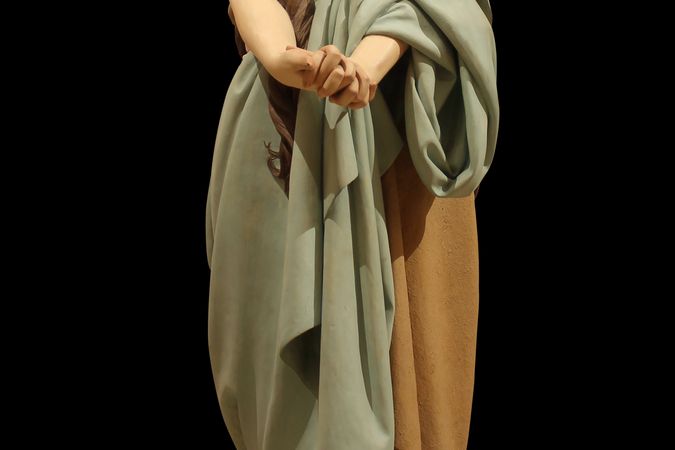
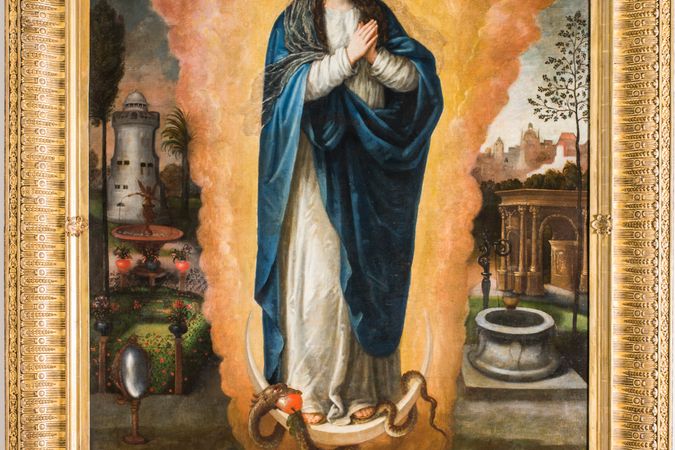
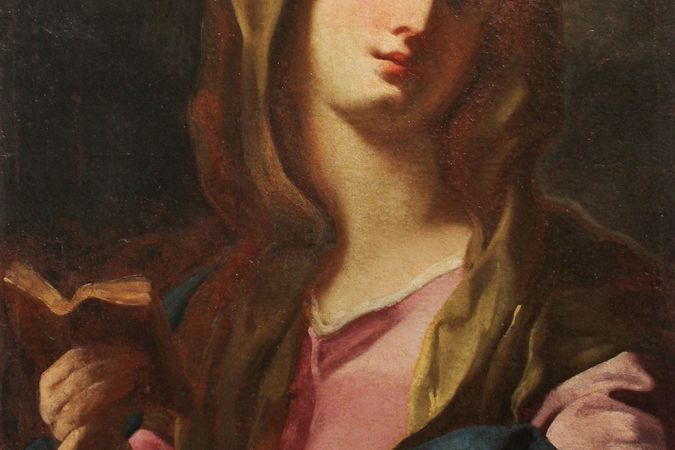
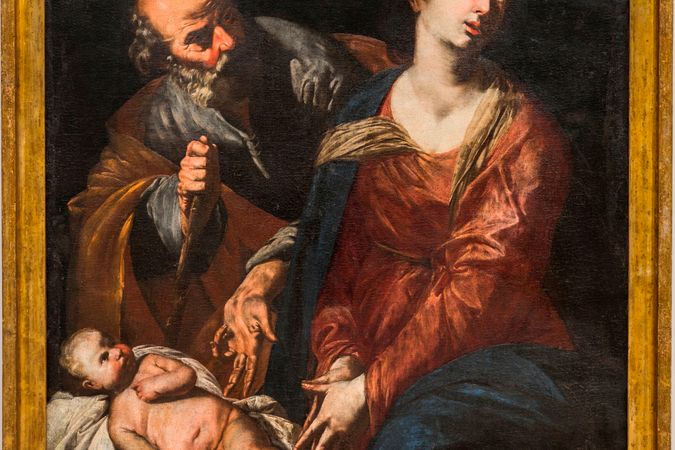

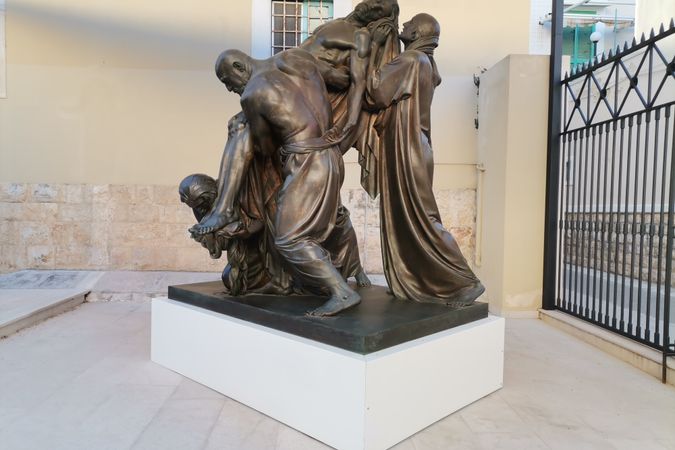
The work "Mercy" by Bernardo Cavallino is kept at Diocesan Museum Molfetta, in Molfetta.
"Mercy" is a work by Bernardo Cavallino from 1649 made with the technique "Oil on canvas".
You can admire the work in the collection of Diocesan Museum Molfetta. Museum tickets can be bought online on Artsupp.