


About
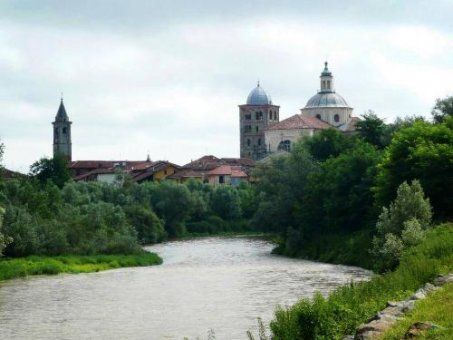
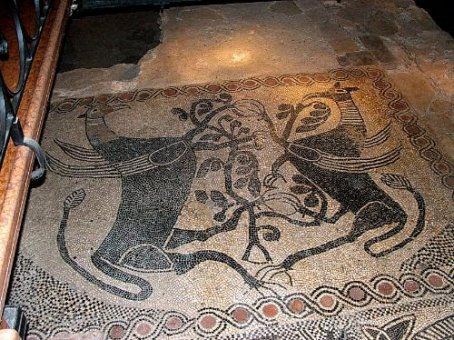
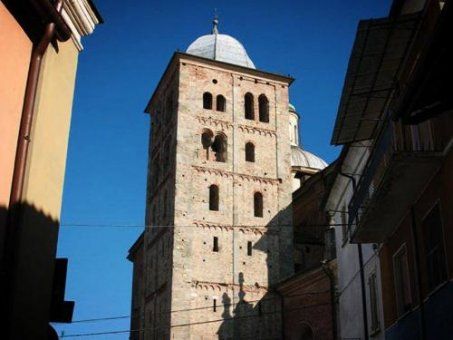
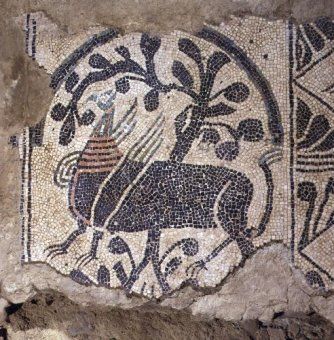
The Fruttuaria Abbey was founded at the beginning of the 11th century by Guglielmo da Volpiano in the territory of San Benigno Canavese. The original building had three short aisles cut by a transept on which five apse chapels opened: with the presence of several altars so different monks had the possibility of celebrating the liturgy at the same time. The walls of the transept chapels retain colorful frescoes with stylized imitation marble motifs. The altar of the cross, in a central position, represented the fulcrum of the entire religious space and behind it is the rotunda of the Holy Sepulcher, dating back to the early construction phases. The pavement of the area, consisting of a series of mosaics with geometric motifs and animals placed within squares, came to light in 1979. On the sides of the altar there are two squares with pairs of facing animals. The northern panel, very incomplete, contained two lions, the southern one, better preserved, two rampant griffins separated by a vegetable branch. A second band at a lower level preserves four eagles, an imperial symbol, within frames geometrically divided into rhomboid spaces. The scene is completed by two other griffins (Christological symbol) in black and white tesserae and polychrome inserts. The mosaics of Fruttuaria, of Benedictine origin, are among the oldest present in the Piedmont area. The eighteenth-century cloister, with a regular octagonal plan, represents the hinge element of the whole complex. During a recent restoration of the walls some elements of the Romanesque phase emerged: these are four small masonry arches, supported by truncated conical capitals, supported by a small column, all in plastered masonry.
Programme and activities
Guided tours, exhibitions and events at Fruttuaria Abbey will appear here. Follow the museum to get updates.