About
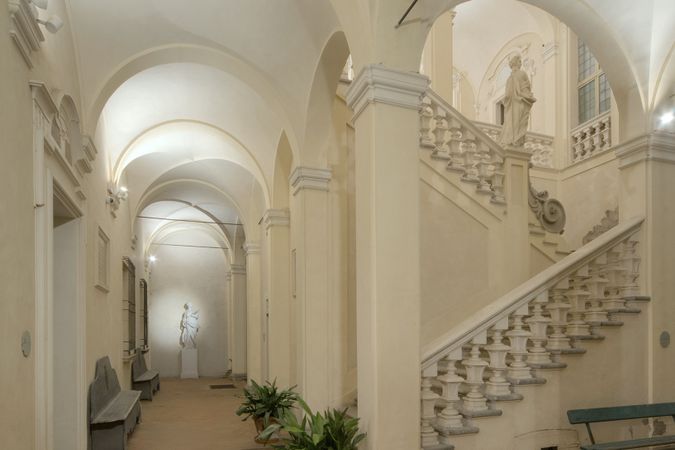
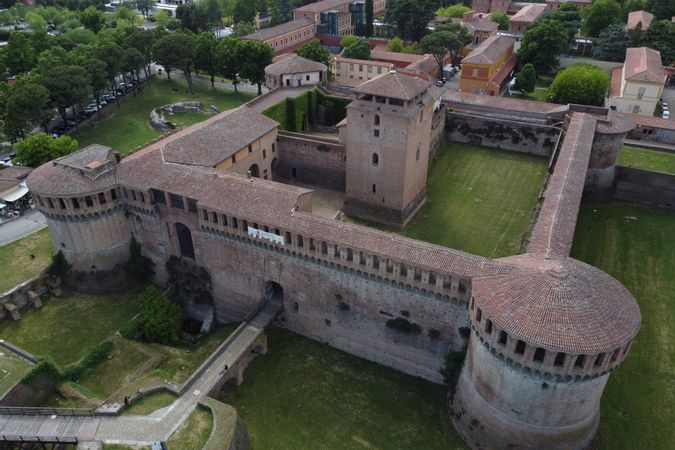
The Museum of San Domenico in Imola is set up in the former convent of Saints Nicolò and Domenico. It is among the most significant buildings in the historic center of Imola and its construction as the headquarters of the Dominican order dates back to the thirteenth century and has been affected over the centuries by various rebuildings, renovations and unfortunately devastations. The restoration and its transformation into a museum made it possible to recover the original spatiality of the convent and to identify the original intended uses such as the chapter house, the dormitories, the kitchen, the granaries, the cells, offering visitors a path to discover the monument and its history through the recovered artistic and architectural emergencies. The possibility of accessing the pulpit of the church restores the entire complex to its original unity and offers a broad and unusual view of the interior of the church of San Domenico where you can admire a masterpiece by Ludovico Carracci. Two routes are set up inside the museum, the City Art Collections and the Giuseppe Scarabelli naturalistic museum .
In the rooms dedicated to the Art Collections , overlooking the first cloister, formerly dormitories and granaries of the Dominicans, over five hundred pieces including ceramics, drawings, coins and medals and stone artefacts are flanked by around a hundred paintings. The route restores the image of the city and its artistic heritage from the Middle Ages to the contemporary. The Giuseppe Scarabell I Naturalistic Museum constitutes the oldest nucleus of the Civic Museums of Imola, founded initially in 1857, when four citizens donated their collections to the Municipality with the intention of preserving them from dispersion and making them of public use. The new collection, preserved in the former Convent of San Francesco, was later enriched with other prehistoric archaeological, ethnographic and naturalistic materials, thus giving life to the Natural History Cabinet of Imola, an institution that occupies an important place in the history of science and of museography at both regional and national level. Promoter of the donation and first director of the museum was Giuseppe Scarabelli - geologist and archaeologist of the prehistoric age, patriot and politician particularly sensitive to the social needs of the community - whose donation includes collections of fossils, rocks and minerals originating from the Italian peninsula and important nuclei of prehistoric finds from the Imola area.
Programme and activities
See allGuided tours, exhibitions and events at Museum of San Domenico will appear here. Follow the museum to get updates.