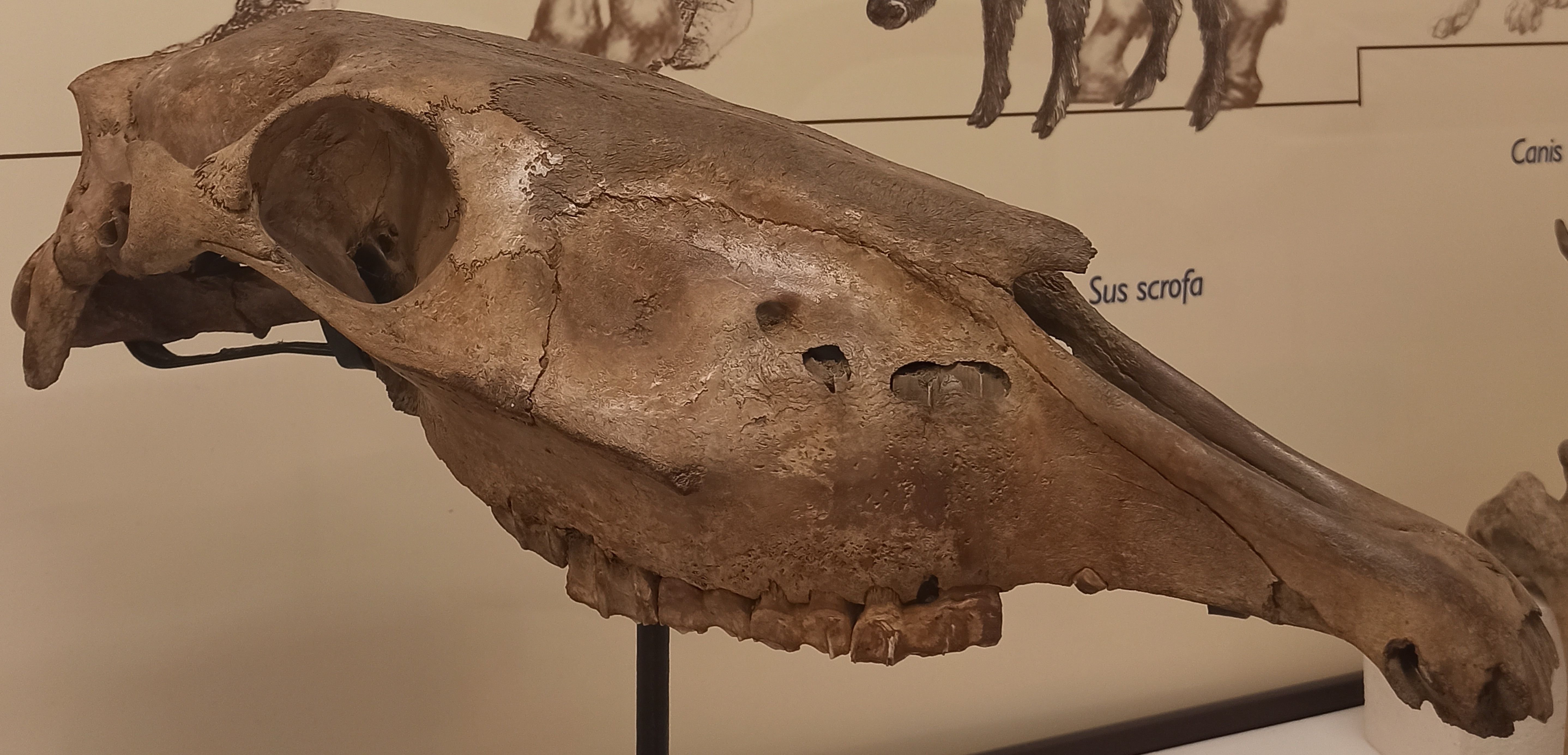
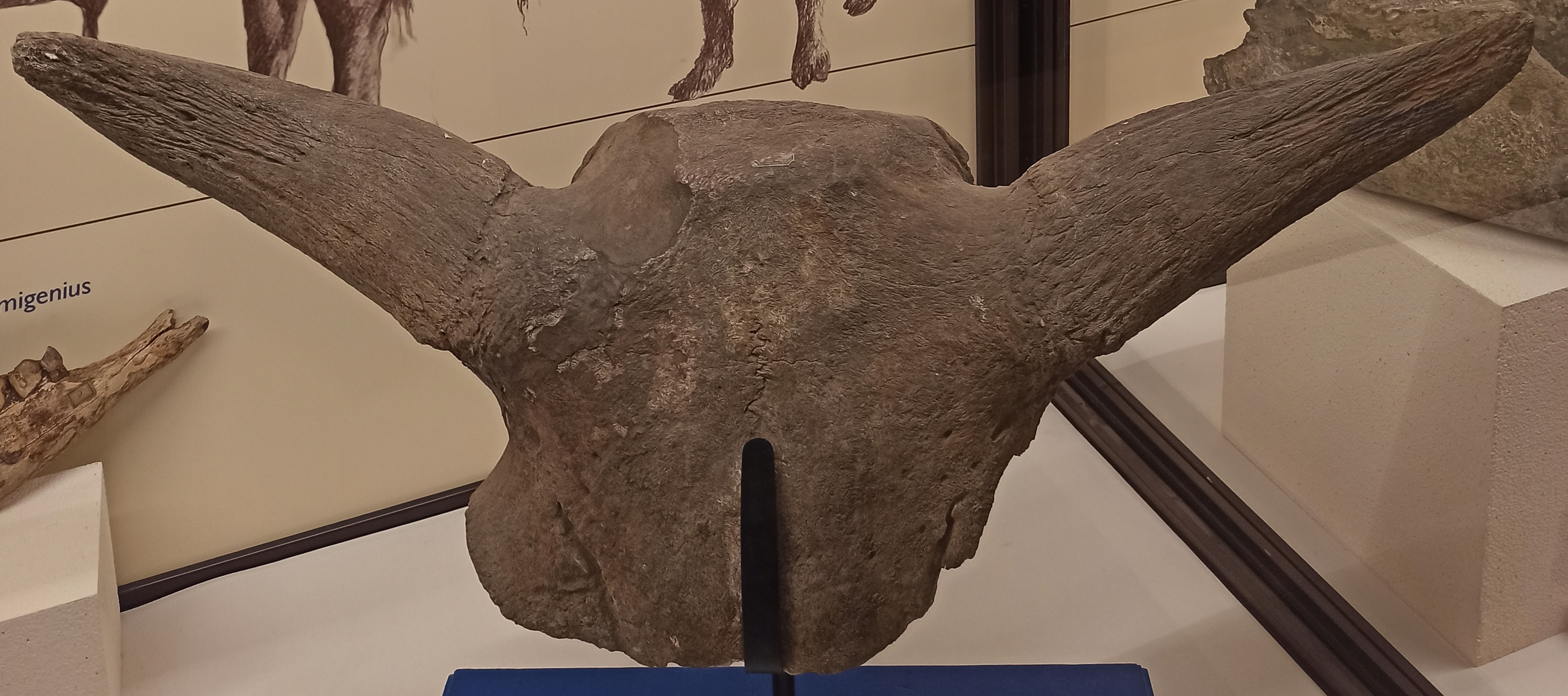
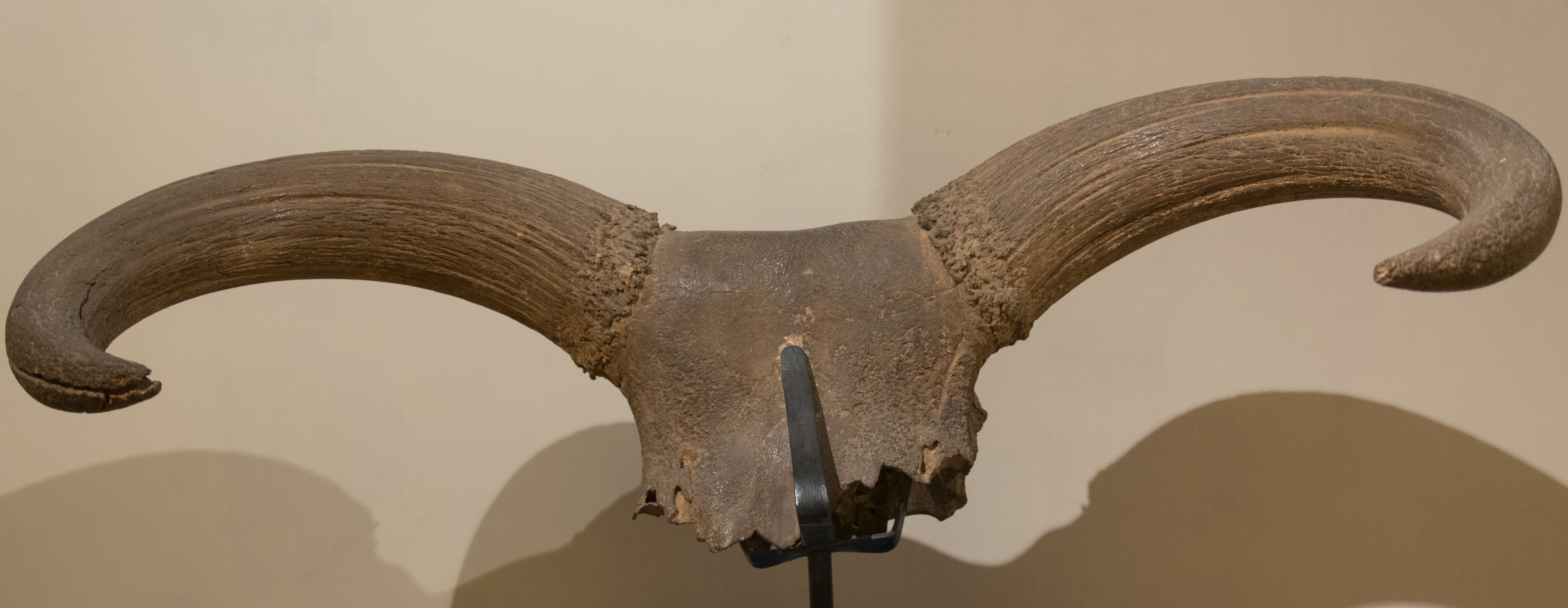


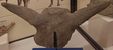
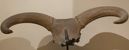
The steppe bison is representative of the climate change underway during the Pleistocene, which leads to a progressive cooling and drying of the environment that culminates in the so-called ice ages. This animal, found in the upper Valdarno from the end of the middle Pleistocene, originated in southern Asia around the middle of the lower Pleistocene. Similar to today's bison, it was up to 2m tall at the shoulder and reached an estimated weight of between 700 and 800kg, with horns up to 0.5m long. The presence of a thicker coat than today's bison indicates an animal adapted to colder climates; moreover, it fed mainly on herbaceous plants in a steppe environment. This animal became extinct, like many other faunas typical of the glacial periods, at the end of the Pleistocene in Europe and Asia and slightly later in North America, being replaced by the current cattle species.