About
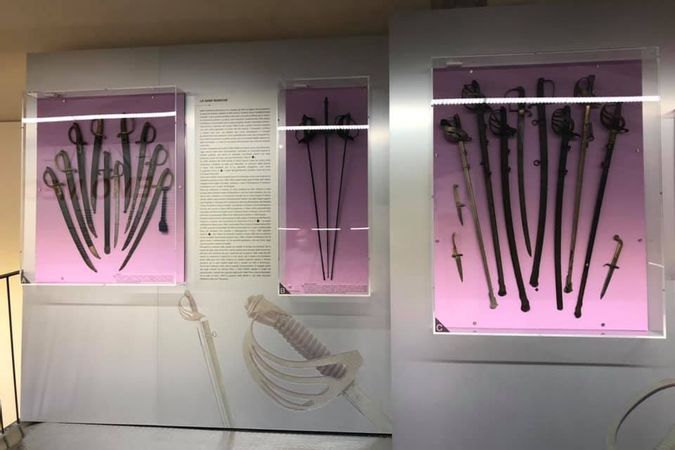
On the top floor of the Aldobrandesco Castle, we find the "Medieval Landscape Museum", a narration illustrated by an archaeological-artistic itinerary (with works by Riccardo Polveroni) which guides the visitor to discover the many medieval buildings that once stood there and the characters historians who commissioned them: from the Marquis Ugo of Tuscany (970-1001), to the Aldobrandeschi counts (11th-14th centuries), up to Guido Riccio da Fogliano, who conquered Arcidosso for the Republic of Siena in 1331.
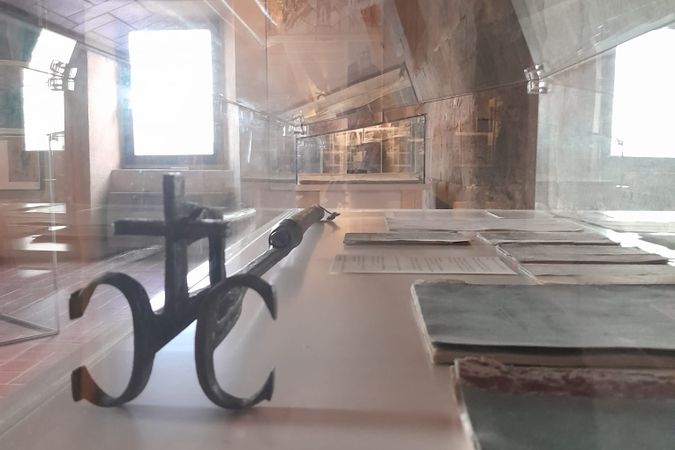
The second room houses the gallery dedicated to the medieval landscape of Amiata and Maremma, where archaeological finds from the site of Castel Vaiolo (10th century) are exhibited, "which include the most important nucleus of ancient chestnuts recovered from excavations in Tuscany". Along the way it is possible to observe illustrations of the architecture and town planning of the medieval historic centers of Amiata and the Valle del Fiora and the formation of the Aldobrandesca county, historical ancestor of the current province of Grosseto.
This exhibition-museum also presents in a comprehensive and comprehensible way the results of the main historical-archaeological research conducted from 2000 to 2013 on the Amiata and Maremma Middle Ages by the chair of Medieval Archeology of the University of Florence. The material history of the Castle of Arcidosso and of the historic centers of the mountains and hills of the Fiora (from Abbadia San Salvatore to Sovana, Pitigliano and Manciano) is recontextualized in the context of the Aldobrandesca County and in the Italian and European geo-political events of the 10th century – XIV. From its beginnings, with an important role played by Hugh of Tuscany, marquis from about 960 to 1001 and 'founder' of our Region, to its full flowering, with the creation of the largest feudal state in central Italy and up to the fourteenth-century results, with the political and military advance of Siena on the former Aldobrandesco territory.
Texts in Italian and English, tactile and conceptual accessibility for the blind and visually impaired (in collaboration with the Braille printing house of the Tuscany Region), an itinerary for school-age children characterize the visit.
Programme and activities
See allGuided tours, exhibitions and events at Medieval Landscape Museum will appear here. Follow the museum to get updates.