


About
The Roman city, which retains the pre-Roman place name, was founded in the 1st century BC in a strategic position, dominating the valley, in a territory already frequented since the Neolithic period (4th-3rd millennium BC).
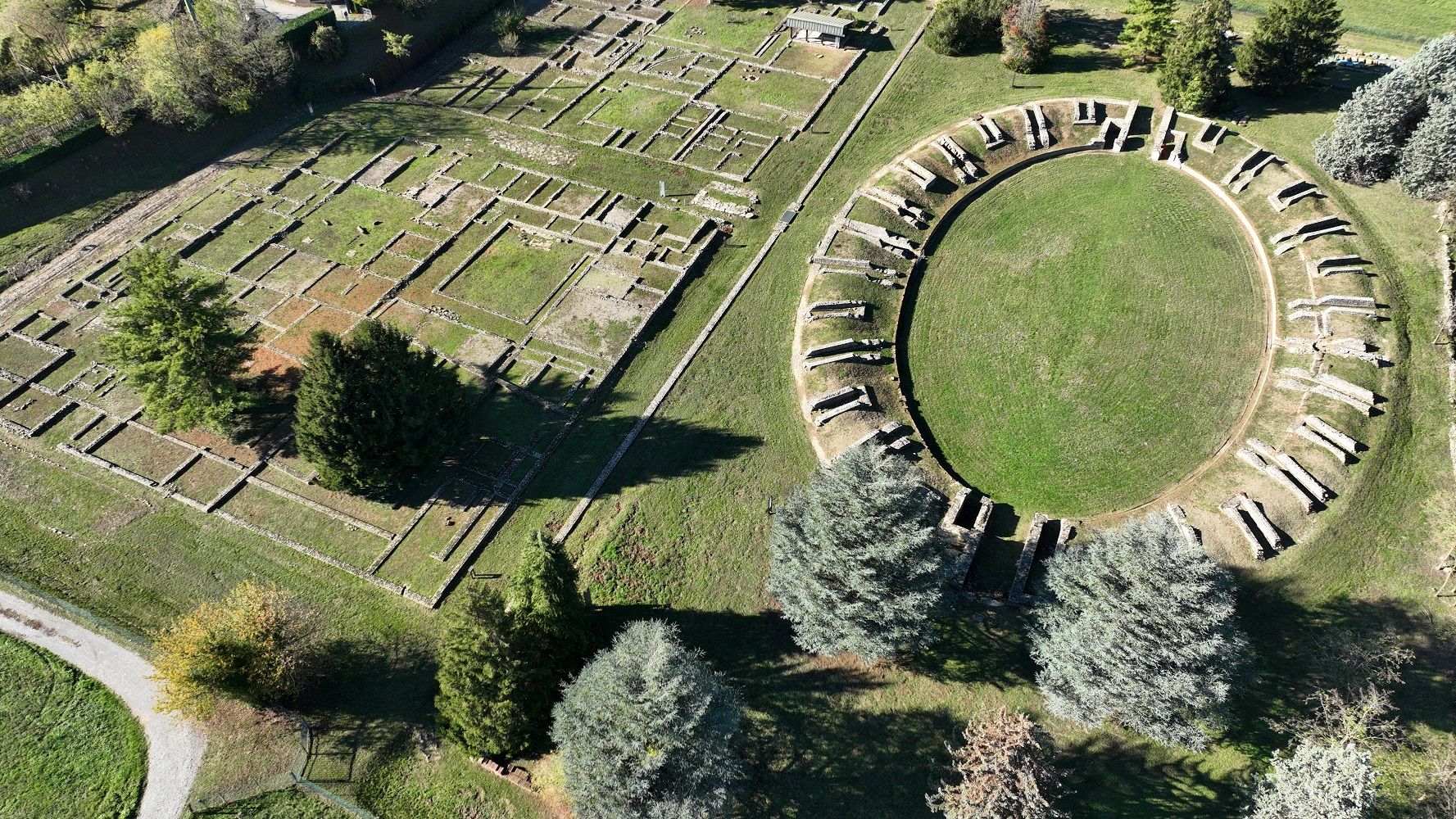
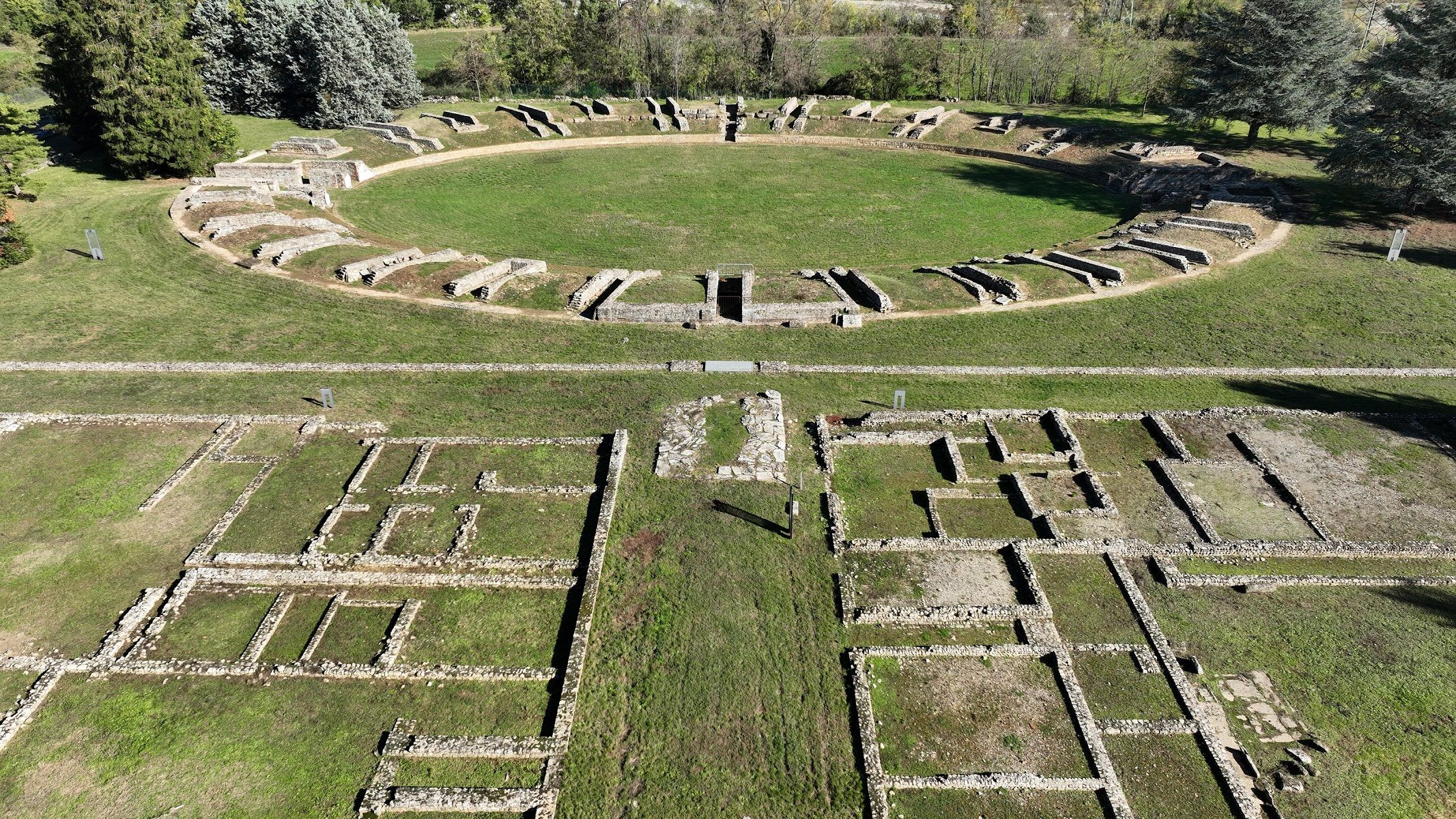
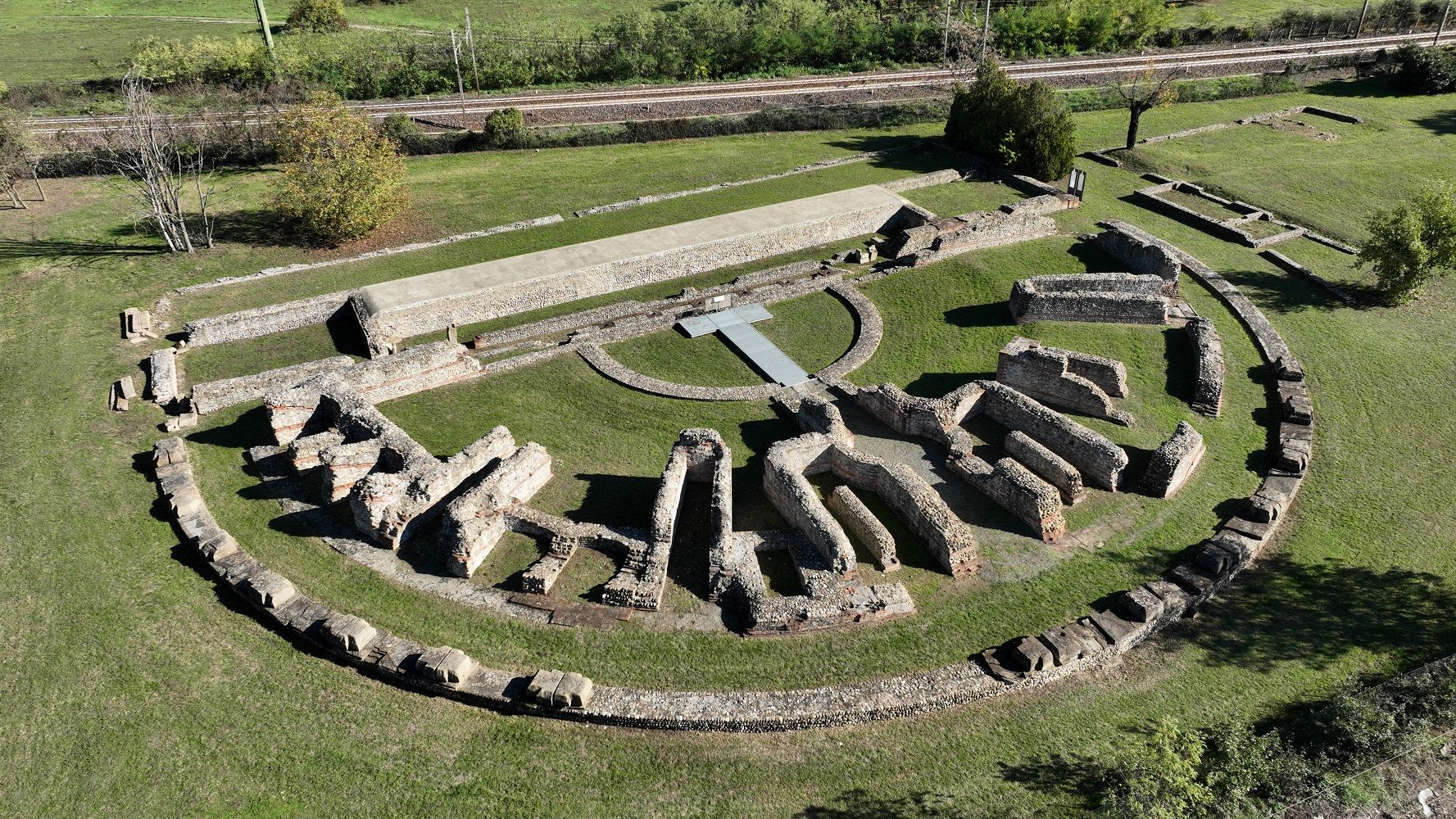
After the construction of the Via Postumia (148 BC), the center received a great boost and reached its peak during the imperial age (1st-2nd century AD). It thus became a city characterized by the typical monumental forms of Roman urban planning: the forum square, temples, theater and amphitheater, baths, and private residential complexes.
During late antiquity and the early Middle Ages, Libarna shrank to a village, until the construction of the fortified structures of Serravalle and Arquata caused the definitive relocation of the population to these better defended sites.
The discovery of Libarna, a fundamental testimony of the Romanization of the regio IX Liguria, took place in the 19th century, on the occasion of the construction of the Strada Regia dei Giovi (1821-1823) and the Turin-Genoa railways (1850) and Milan-Genoa (1911). The archaeological area that can be visited today corresponds to about a tenth of the original city, largely brought to light by the subsequent research of the Superintendence for Archaeological Heritage of Piedmont.
The city was located on two main roads: the Via Postumia (main axis) and the Decumanus Maximus intersecting it perpendicularly. The blocks were occupied by private houses, built from the end of the 1st century BC with rooms arranged around a central porticoed courtyard (peristyle). Some show considerable size and decorative richness: marble slab floors and a large mosaic depicting the myth of Lycurgus and Ambrosia have been found. The construction of the amphitheater (2nd century AD) largely changed the nature of the block, which saw the opening of shops and an inn. Some of the most significant archaeological materials are currently exhibited at the Museum of Antiquities in Turin and in the Archaeological Area of Libarna, housed in the Town Hall of Serravalle Scrivia.
Programme and activities
Guided tours, exhibitions and events at Libarna Archaeological Area will appear here. Follow the museum to get updates.