

About
The Archaeological Museum of Piraeus, located at 31 Charilaou Trikoupi Street, next to the Hellenistic theater of Zea in the port of Piraeus, reconstructs the history of the ancient city from the Mycenaean period to the Roman world. Its collection consists of artifacts from excavations in the port, along the coast of Attica, and from nearby islands.
Of great value is the famous Apollo of Piraeus, an archaic-Renaissance bronze kouros discovered in 1959, which is the museum's centerpiece. In the rooms dedicated to the bronzes of Piraeus, one can admire statues of Athena and Artemis (4th century BC) and a tragic bronze mask, all found during an ancient harbor hideaway.
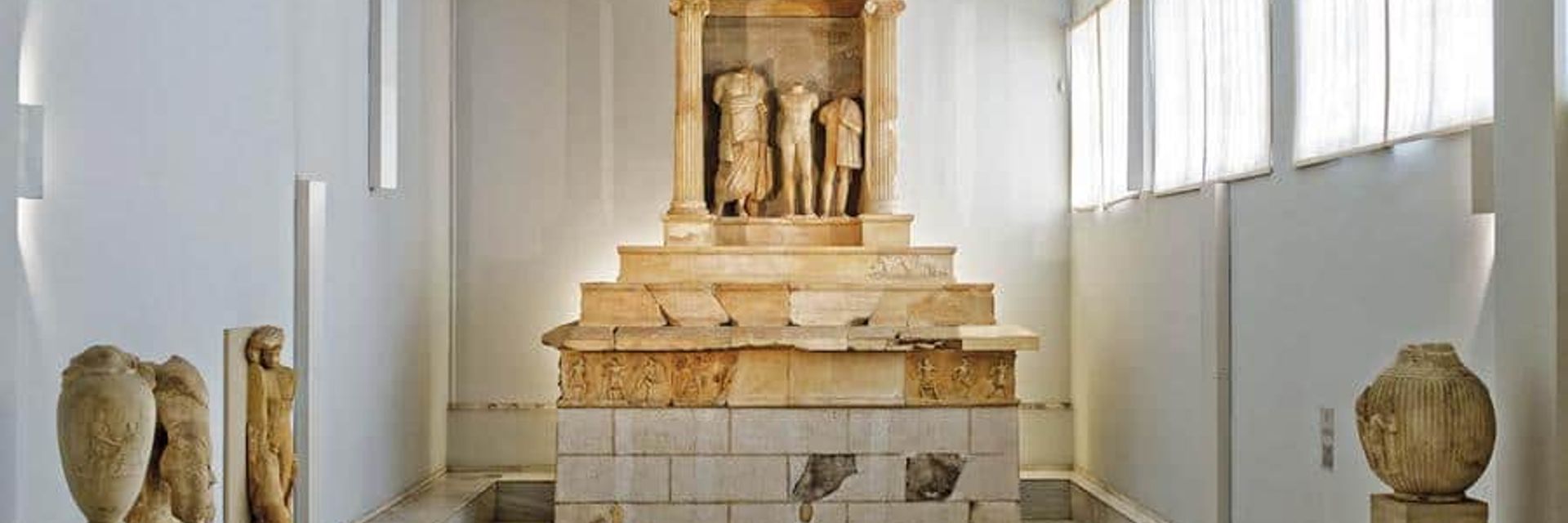
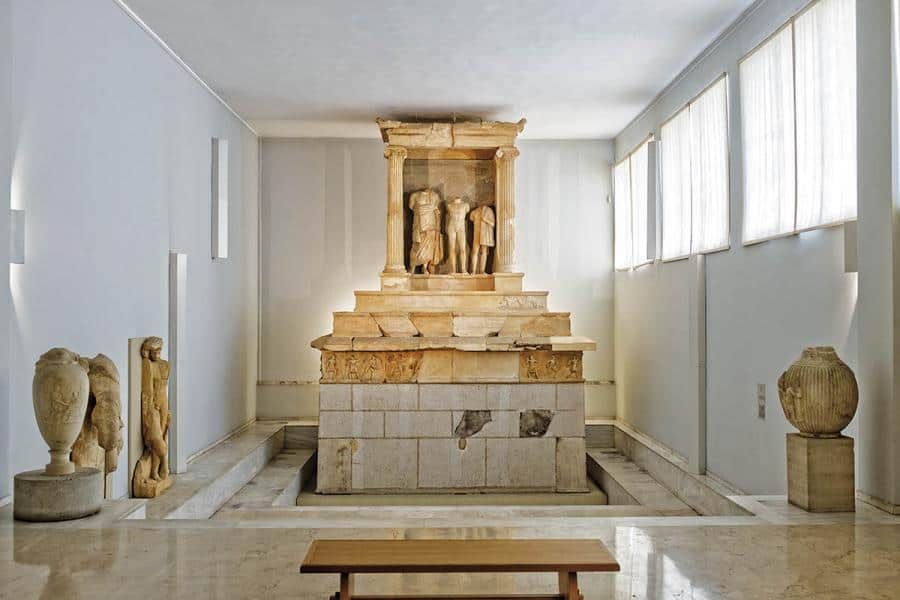
The funerary monument of Kallithea, a refined monument from the Hellenistic period with polychrome friezes and figures of a metics family, is exhibited in room 8. The various thematic rooms also display Mycenaean ceramics, everyday life objects, funerary steles, classical reliefs, and Hellenistic and Roman sculptures. Among the most imposing works is the colossal head of Emperor Hadrian, the only example in Greece of a monumental imperial statue.
The museum tour is spread over two floors, inside a modern building inaugurated in 1981 (1,394 m²), adjacent to the original building, now a sculpture storage. In the basement, there are restoration laboratories and storage facilities.
Programme and activities
Guided tours, exhibitions and events at Piraeus Archaeological Museum will appear here. Follow the museum to get updates.