


About
The Olèrdola monumental complex is one of the seats of the Archaeological Museum of Catalonia.
According to the data, the archaeological site was founded between 911 and 937 by Sunyer, a count of the city of Barcelona.
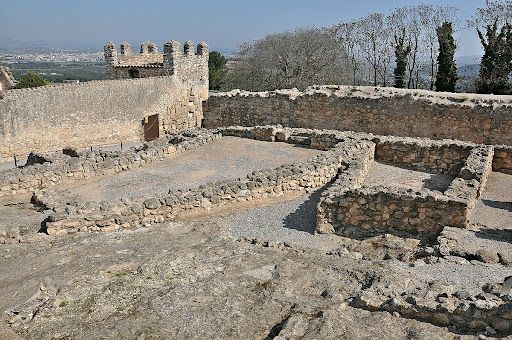
The museum was opened in 1995 but had already been declared a Cultural Asset of National Interest in 1931 and also an Asset of Cultural Interest (BIC). The site of the mountain of Olerdola was a strategic enclave from which several settlements have come down to the present day, the first of which dates back to the beginning of the Iron Age (VIII - early VI century BC). Olerdola also preserves some works of Roman imprint, namely the wall, the cistern (capacity 350 square meters) and the watchtower.
Even today the urban structure of the village has two main nuclei: at the top the military area with the castle and, further down, the sacred area, with the church and the necropolis. In the center an area of economic activity: press and cellar, the Roman cistern again in use, the reopened Roman quarry, a barn and others. The lower part of the mountain was occupied by the houses of wealthy peasants and artisan shops, including a blacksmith, which opened onto the main street around the front door. The civitas extended outside the walls, being the best known place in Pla dels Albats, with the church of Santa Maria and its necropolis of anthropomorphic or olerdole tombs. The church of Sant Miquel was a parish church until 1884, when the Bishopric of Barcelona sold it along with the entire site and the place became a farm.
Programme and activities
Guided tours, exhibitions and events at Museum of Archeology of Catalonia Olerdola will appear here. Follow the museum to get updates.